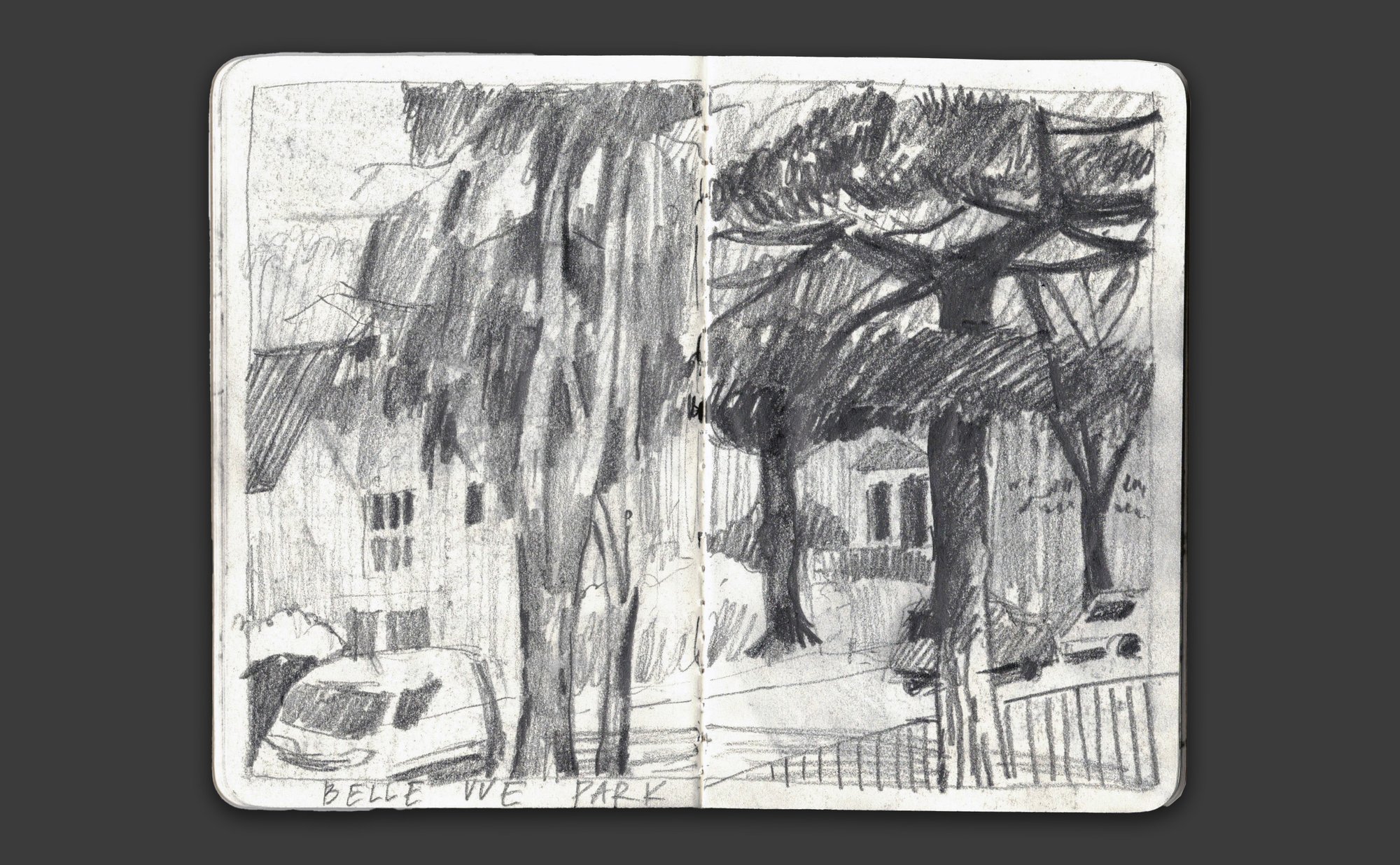
This walk starts in Belle Vue Park, a small green square in the middle of town. Then it goes almost next door, up to St Augustine’s Church on the highest point of Penarth, with the Bristol Channel behind it. I have drawn in both places many times. The more I learned about them, the stranger the pair became. The park exists because houses could not be built there. And the church has a war story that I think about every time I draw its tower.
The park that exists by accident
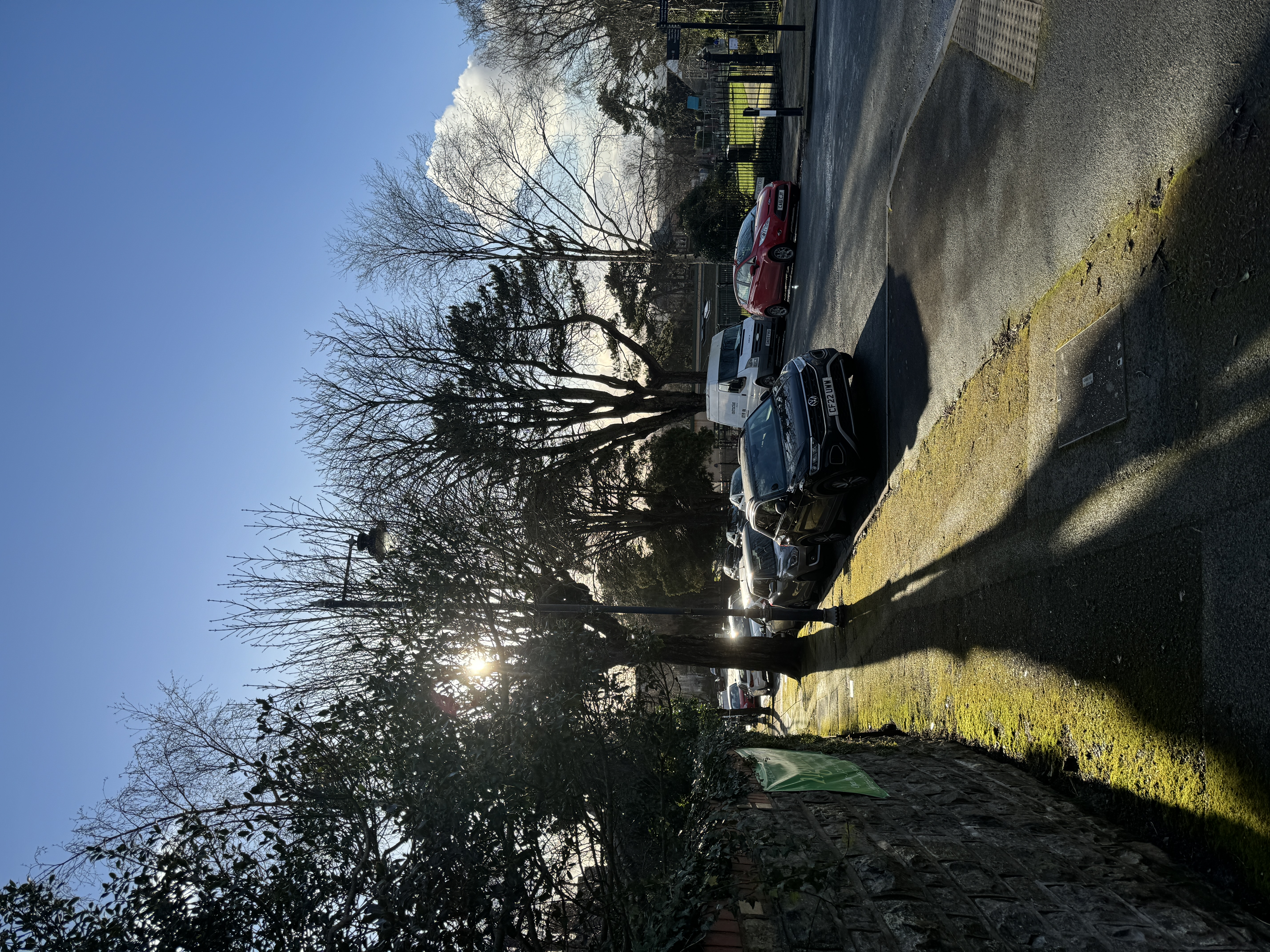
Belle Vue Park is a quarry. Not “was” — under the lawns and the bowling green it still is one. In Victorian times this hole in the middle of town supplied the local blue lias stone. Many grey garden walls in Penarth came out of this ground.
Then the quarry closed and was filled in. Here the story turns: the new ground was too soft for houses. Nobody could build on it. So in 1914 the town made a garden out of it. At the opening the contractors allowed themselves one careful sentence about the “great difficulties which the public generally were not aware of”. The most valuable empty ground in Penarth became a park because it could become nothing else.
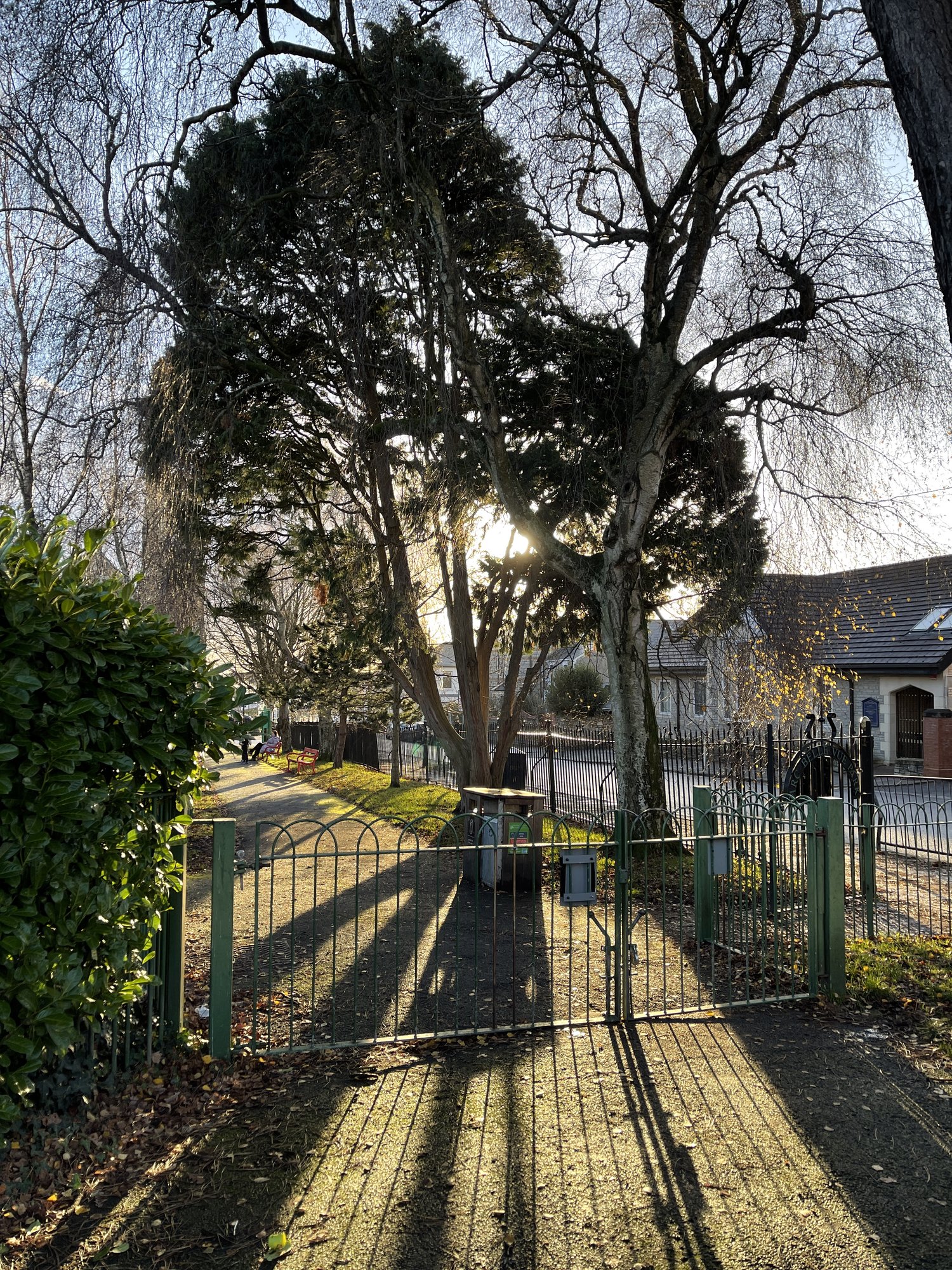
The opening went sideways too. The Earl of Plymouth gave the land and was supposed to open the park in May 1915. The war kept him away, so his agent did it instead. Some sources say the park was born in 1914, others say 1915. Both are right in their own way: the park was finished in 1914, and the official ceremony came in May 1915. It depends on what you count — the ready park or the opening.
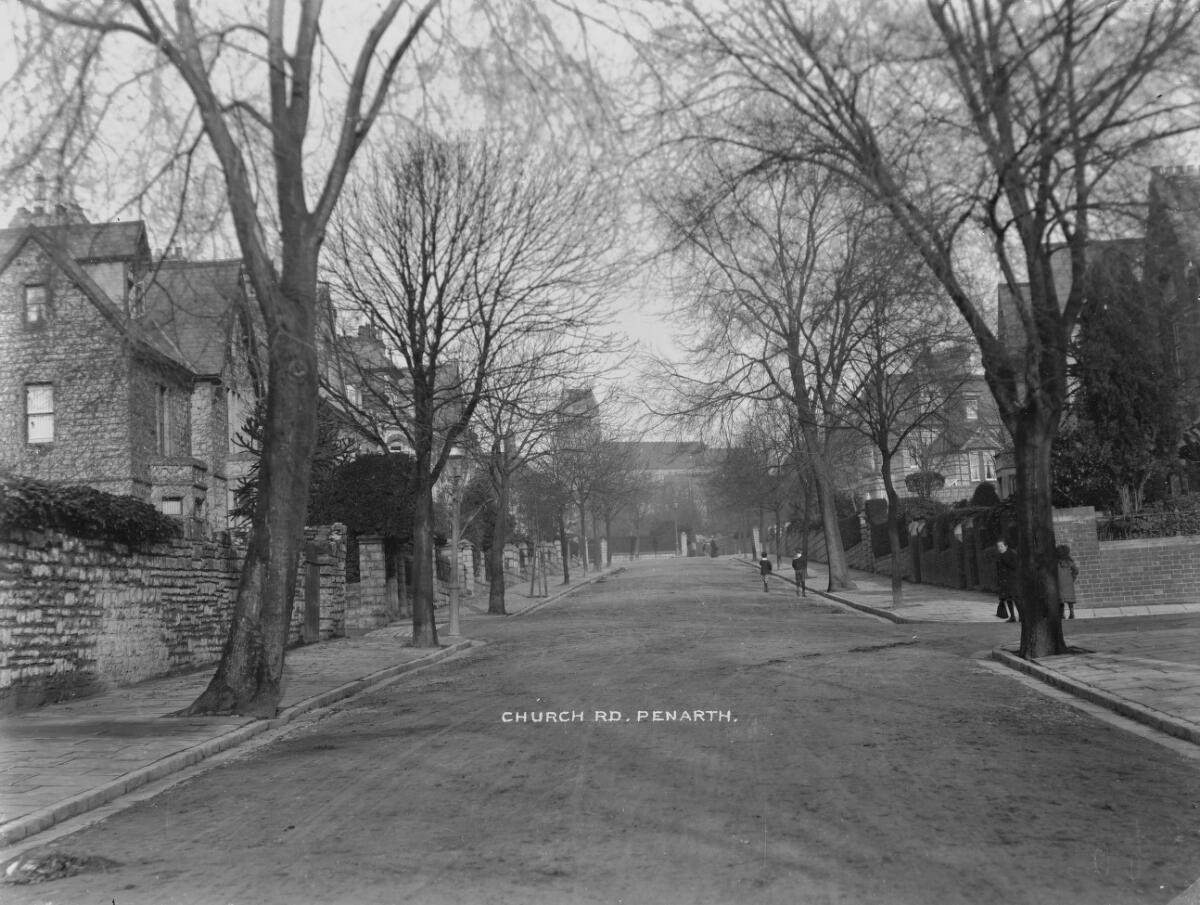
Church Road, c.1905 — a few years before the park was laid out beside it. Photograph by Martin Ridley, Martin Ridley Collection / National Library of Wales via Wikimedia Commons, public domain.
.jpg)
My favourite thing in the park is the one people notice least: the iron railings. They went up in 1914, and they are still the originals. For Britain this is rare. In the Second World War railings all over the country were cut down for scrap. But Belle Vue had an air-raid patrol post inside the park, and its railings stayed.
I have not drawn these railings yet, but I want to. They make a steady dark rhythm with green behind it. And it would be a special feeling to draw the same bars somebody painted for the first time in 1914.
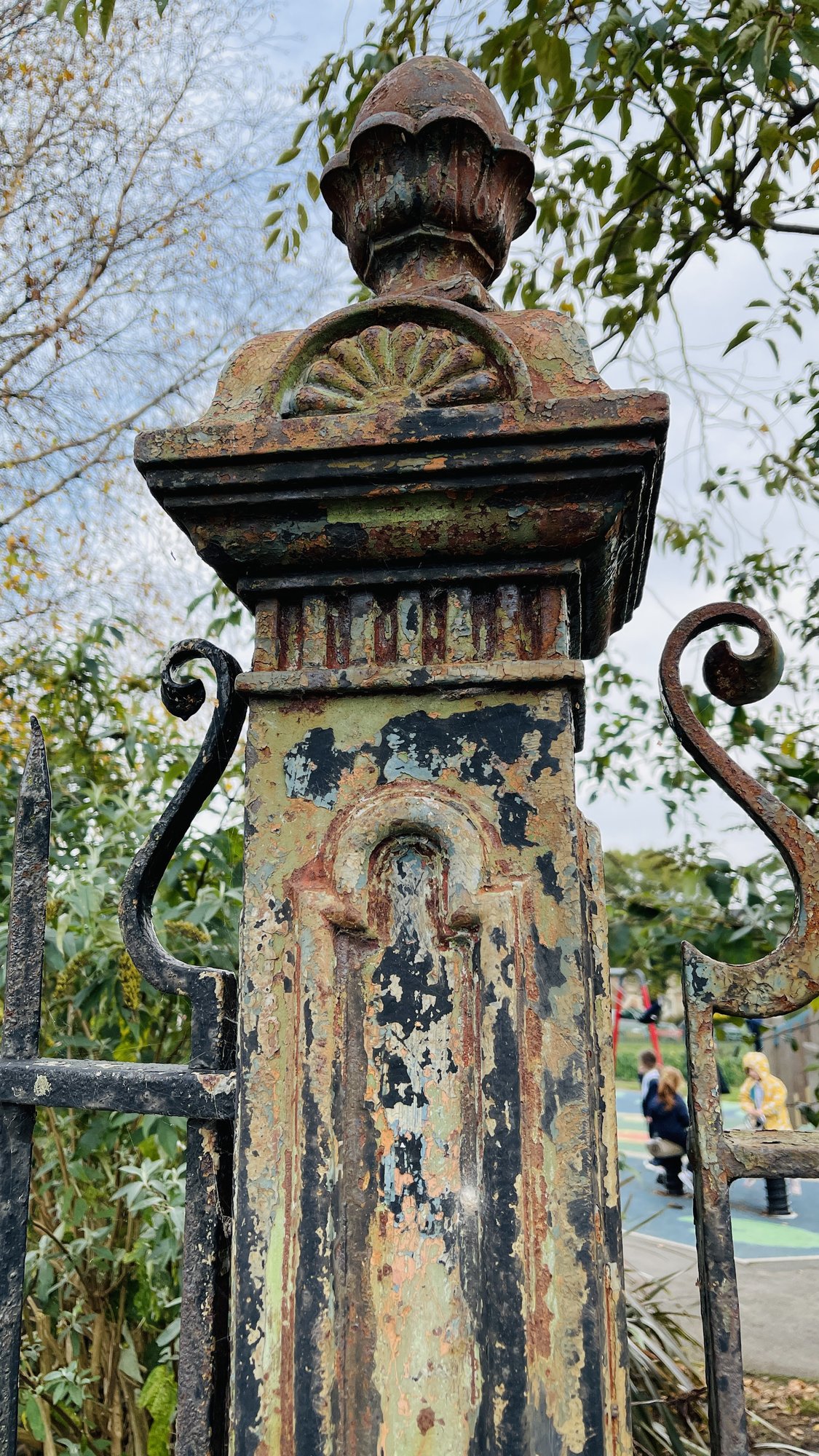
Look at one of the gate posts up close. The whole century is right there: layer under layer of paint, green over black over older green, peeling back to iron. Nobody would design a surface like that on purpose. It is asking to be drawn.
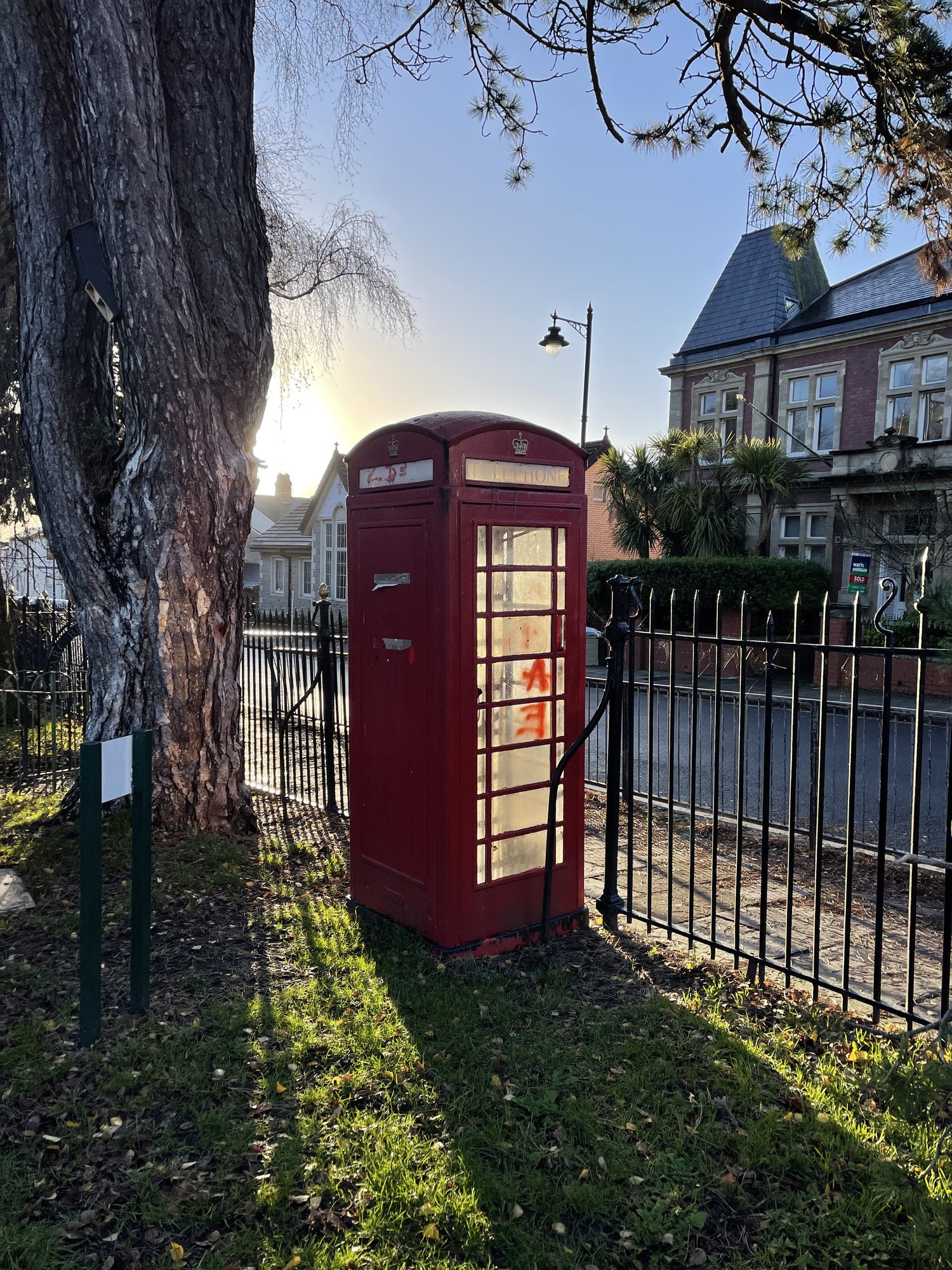
By the Albert Road entrance, under a big pine, stands an old red telephone box. It is slowly rusting into the same colours as the railing posts. As a telephone it has little to say now. As a subject — red box, black railings, low sun — it earns its keep.
The church across the road
Just over the railings on Albert Road stands a church that people now come home to. It is the old Albert Road Methodist Church. In the evening, the light in its Gothic windows is somebody’s kitchen.
Its story is all fire and scattering. It was built in 1906, because the older chapel on Arcot Street had burned down the year before. In the Second World War its school hall served as a forces’ canteen — and burned down too, in 1942. The church itself survived.
Later the congregation thinned out and joined another chapel down the road. The building’s treasures went travelling: the organ to a church in Swansea, the great east window all the way to Canada. The shell stayed — the tower without its pinnacles, the pointed windows, the red and grey walls. Now there are flats and workspaces inside. A church that gave everything away and became a house. I keep thinking there is a drawing in that.
Two more small things, because this park collects them. In 2012 the BBC filmed an episode of Doctor Who here, so these lawns have technically hosted an alien invasion. And by the entrance there is a small pyramid of blue lias stones with a time capsule underneath. It was sealed for the park’s centenary and will be opened in 2064. Local people brought the stones from their own gardens. So the quarry stone that left this ground long ago has started to come home, one garden wall at a time.
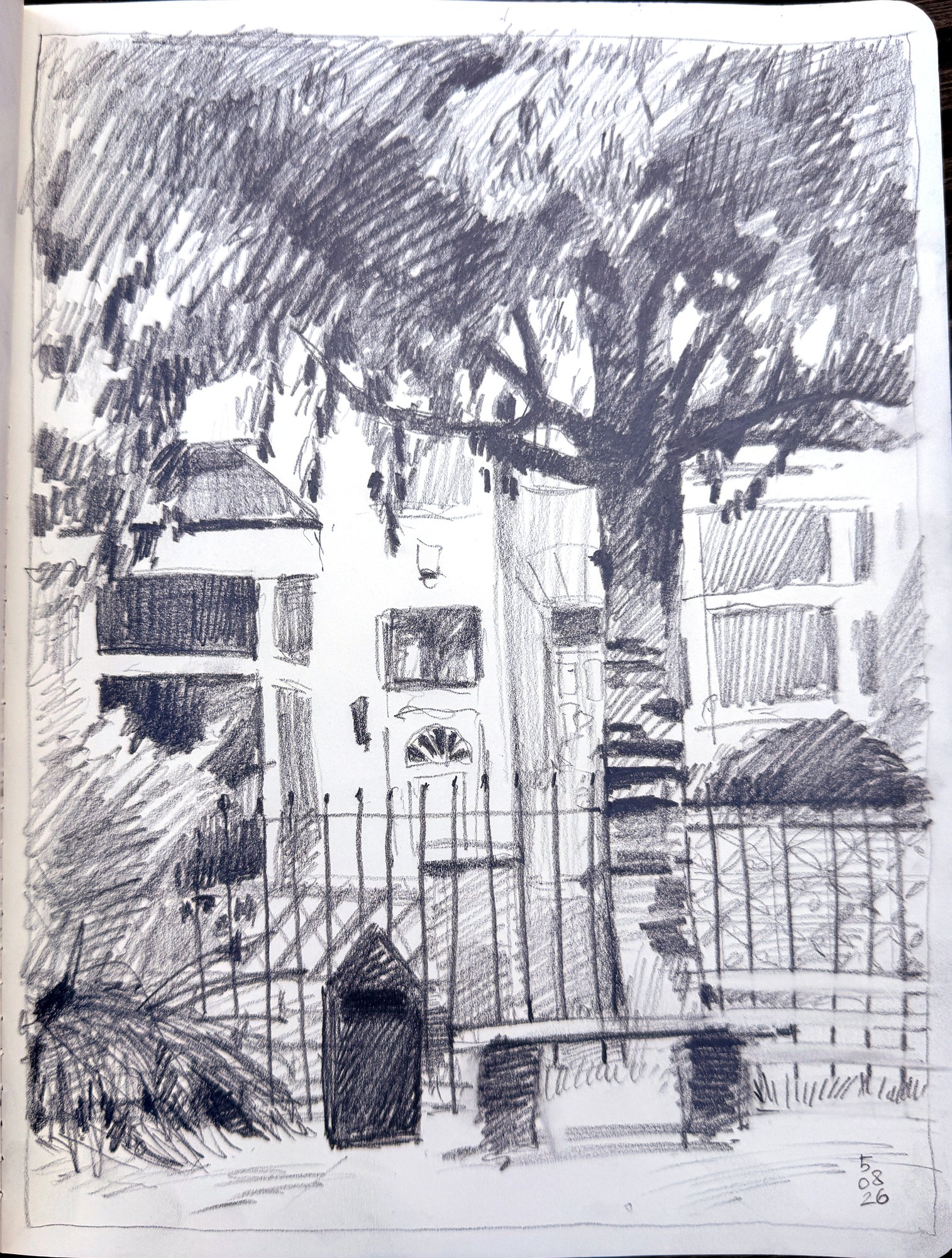
We meet in Belle Vue with Espresso Sketches now and then. There are benches, old trees, and the pavilion for shelter when the sky changes its mind. The town is close, so nobody’s coffee goes cold. It is the most forgiving sketching spot in Penarth.
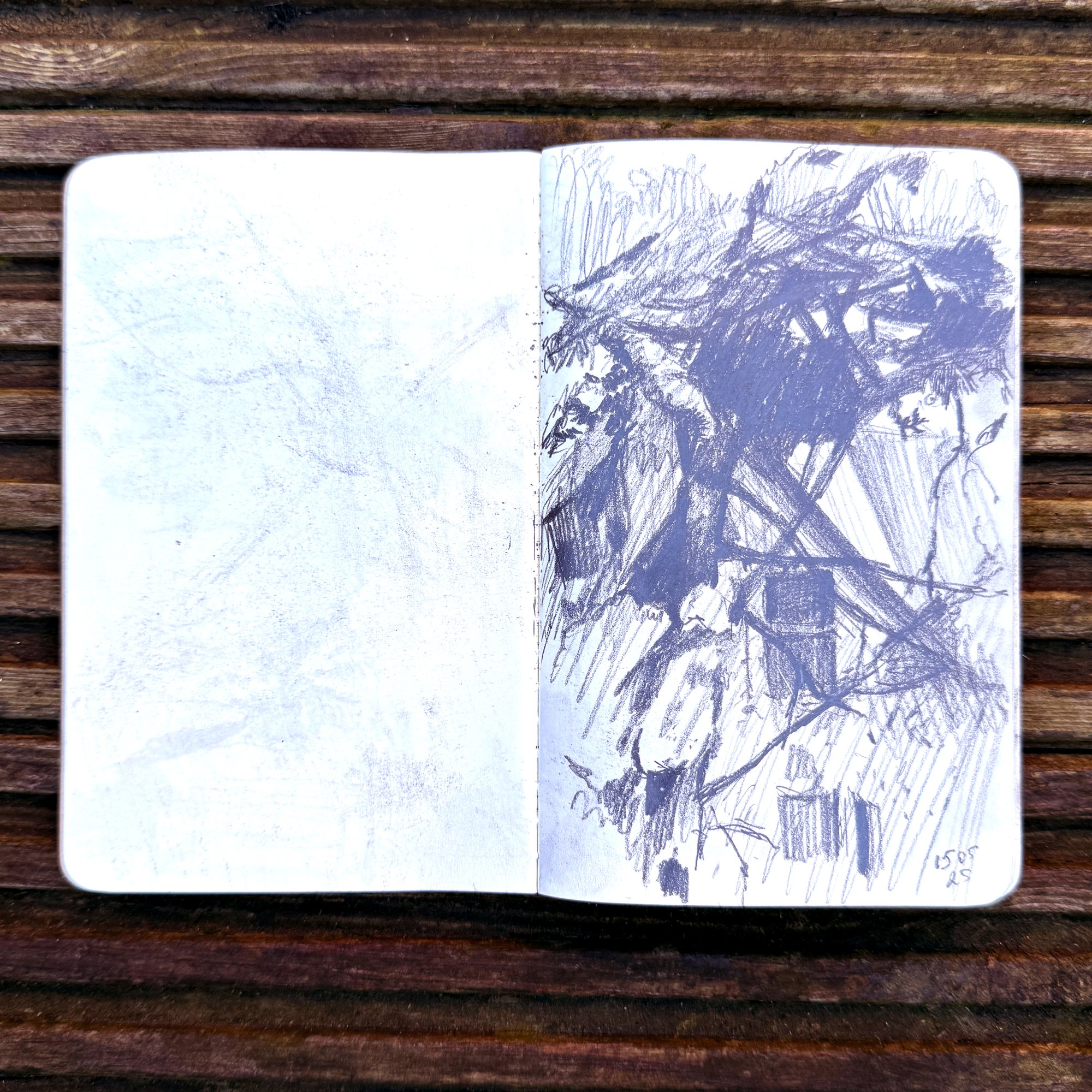
What I love drawing here most are the trees, especially the pines. You just lift your head and draw. My sketchbooks have many pages of them.
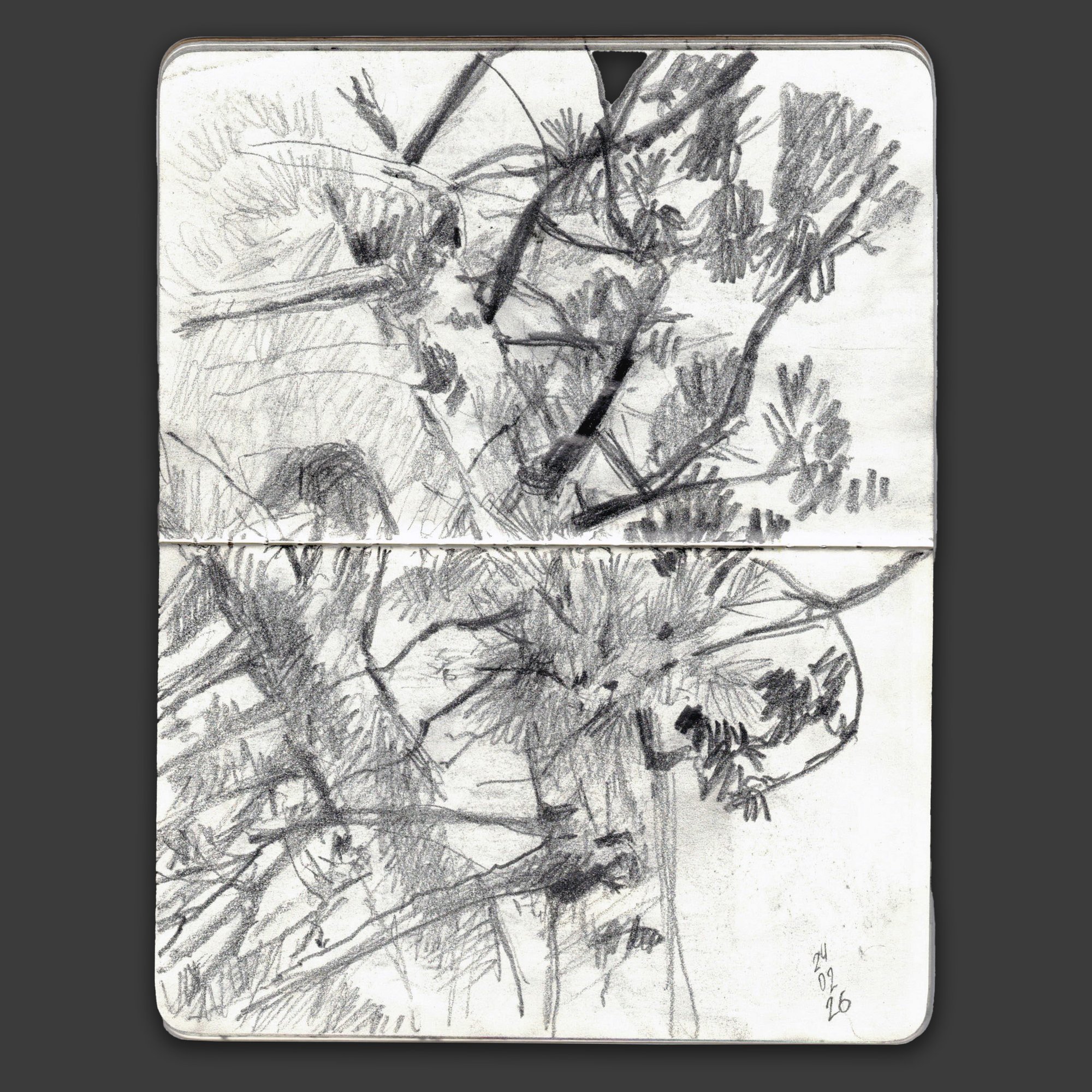
Up the hill
The park and the church stand almost side by side. St Augustine’s takes the highest point of Penarth: about 60 metres above the sea. For comparison, the clock on Windsor Road stands at about 50 metres, Belle Vue Park at about 45, and the Esplanade at zero. So the walk from the pier up to the church is a climb the height of a twenty-storey building. And the top of the tower is about 85 metres above the water.
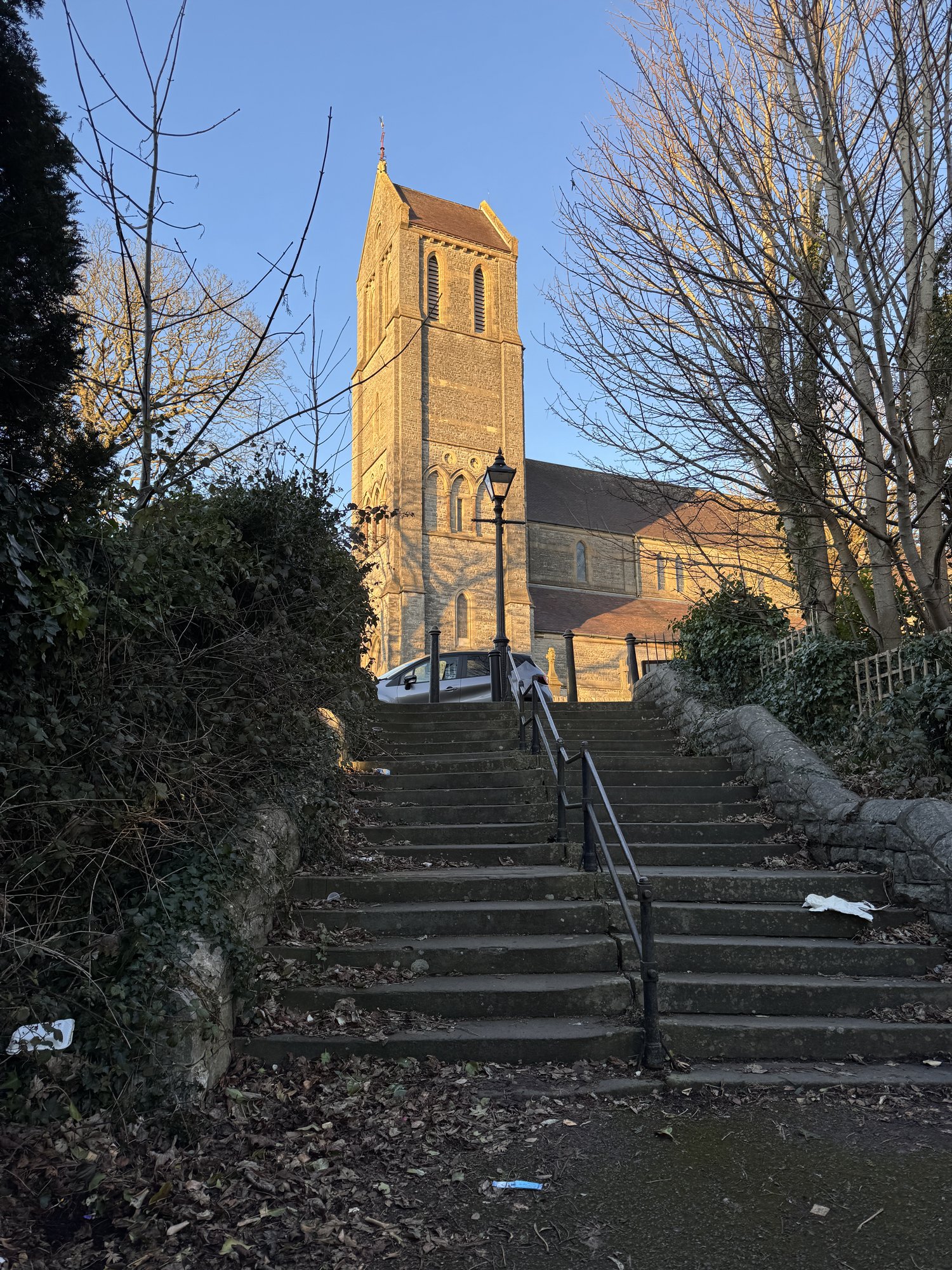
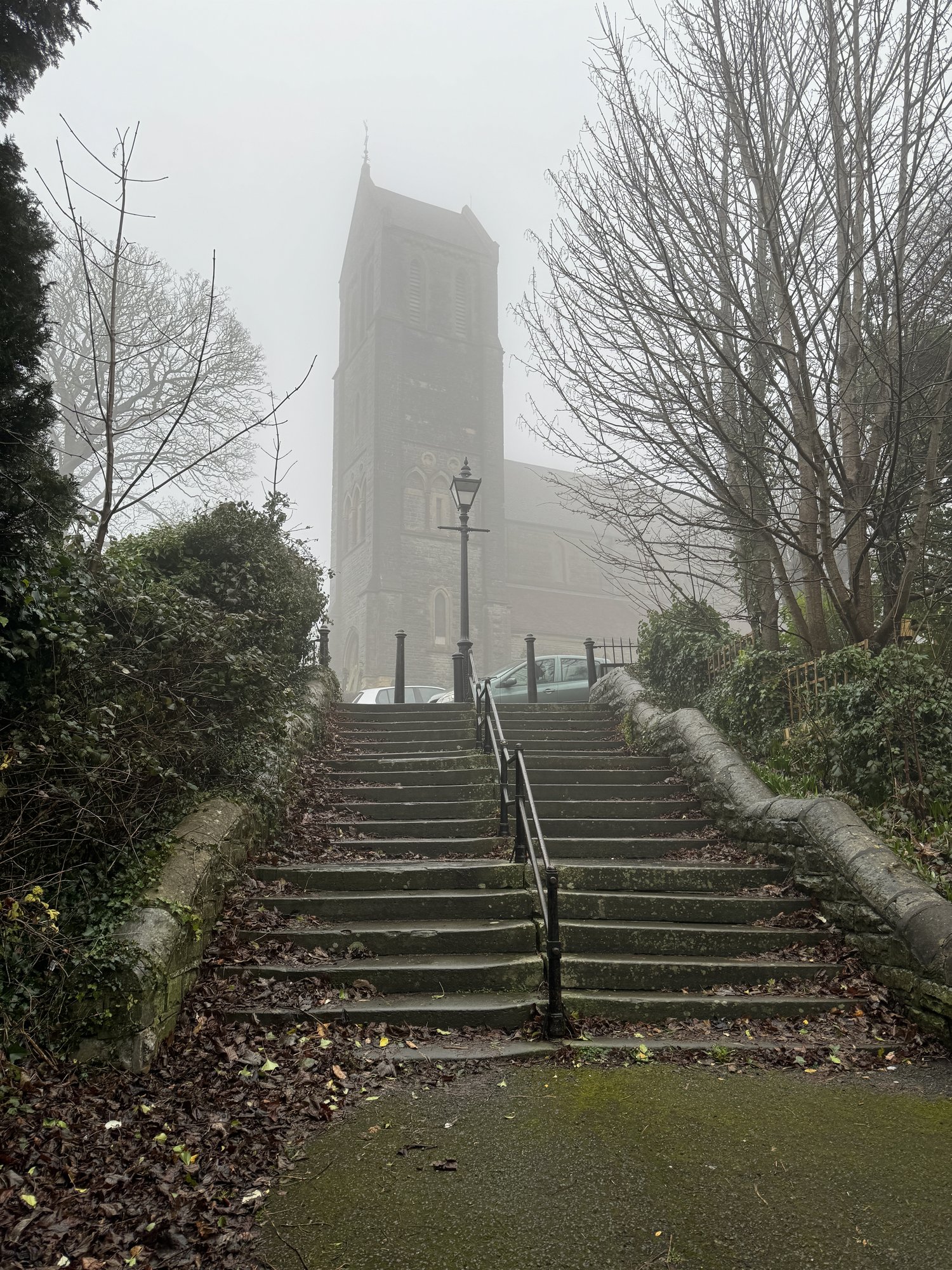
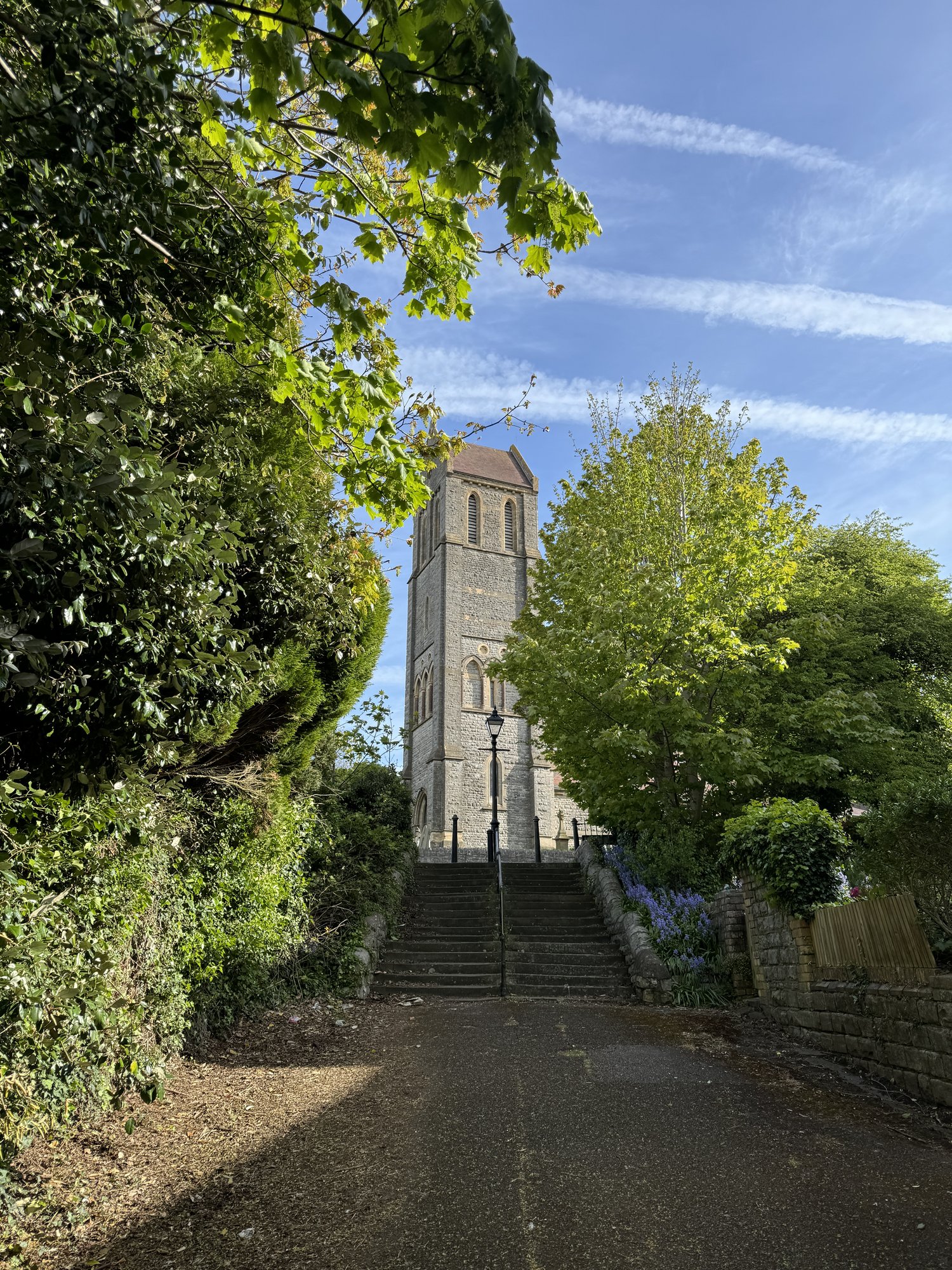
My favourite way up is the old stone steps between the hedges, with a lamp in the middle and the tower straight ahead. In the right evening light the whole church turns the colour of honey. On a foggy morning the same tower is only half there.
A tower designed by sailors
St Augustine’s was built in 1866 by William Butterfield, one of the great Victorian architects. You may know his other buildings: All Saints on Margaret Street in London, Keble College in Oxford, the cathedral in Melbourne. But the odd shape of the tower here is not really his. His first design had a modest, squat tower. The Bristol Channel pilots objected. For generations they had steered into Cardiff by the old church on this spot. They wanted a roofline they could recognise from far out at sea. The plans were changed.
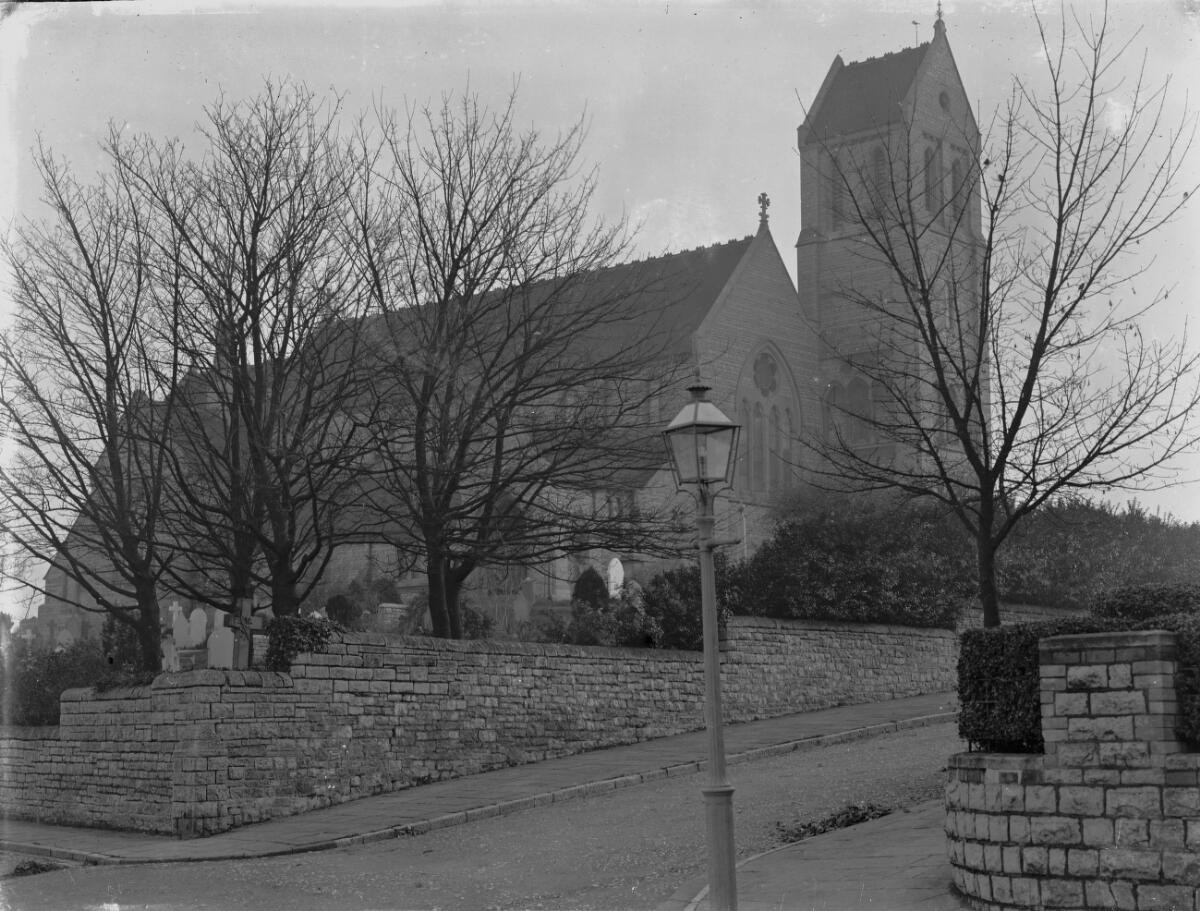
St Augustine’s, c.1905. Photograph by Martin Ridley, Martin Ridley Collection / National Library of Wales via Wikimedia Commons, public domain.
.jpg)
The saddleback profile repeats the silhouette of the old church. There is a nice detail here. Admiralty charts are the official sea maps of Britain. Sailors navigate by them, and the charts mark only what matters at sea: depths, lights, landmarks. The Friends of the church believe St Augustine’s is the only church building in Britain to appear on one of these charts. I do not know how exact that claim is. But the essence is true, and I find it wonderful: the shape of this church was agreed between an architect and the sea.
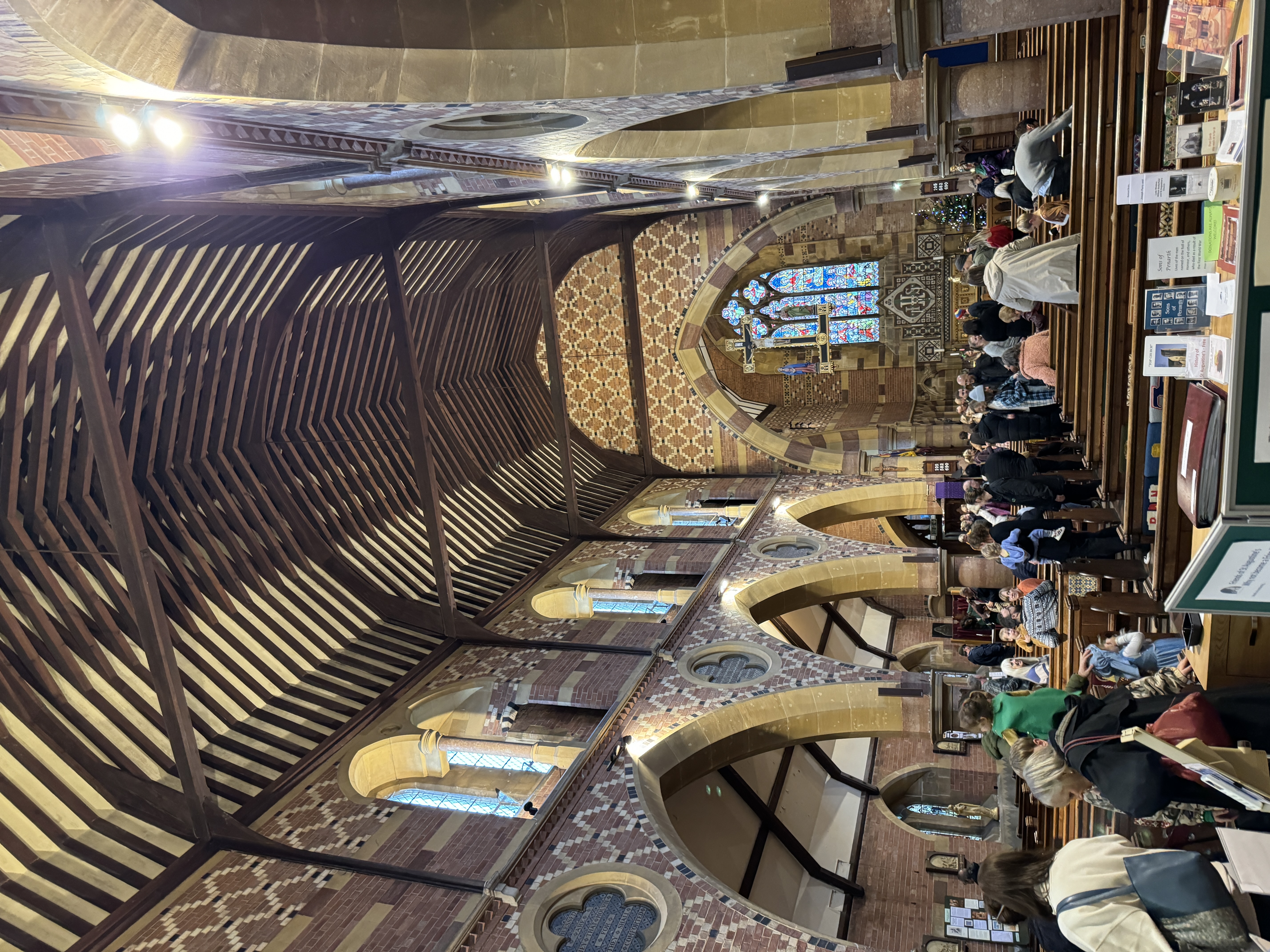
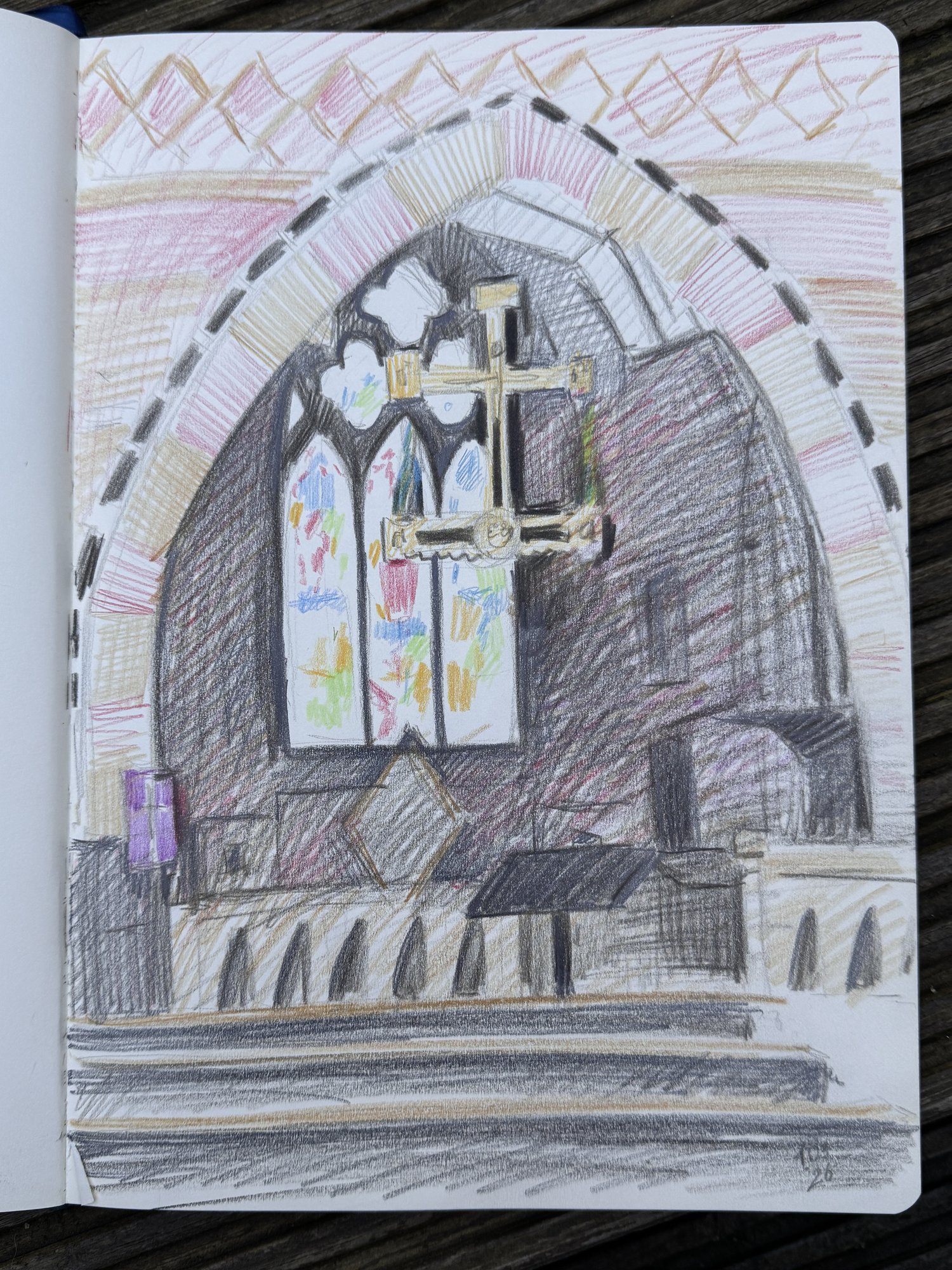
Butterfield played a quieter trick of his own. Outside, the church is plain grey limestone. Inside, the walls break into bands and diamonds of red, cream and black brick, floor to roof, like a knitting pattern the size of a building. The architectural historian John Newman saw all of this for his 1995 guide to the buildings of Glamorgan. He called it one of Butterfield’s finest churches: “big boned and austere outside, highly charged” within. The contrast still works. You walk in from grey Wales into colour.
The church that was here before
There was a church on this headland for about six hundred years before Butterfield came. A small Norman one, from the 1240s. It served a little village on the Head. Over the centuries that village slowly emptied. In the census of 1801 the whole manor of Penarth had 72 people, and the church stood almost alone above the cliff. The Victorian town we know grew later, and in a new place. The first Penarth is simply not there any more. That is why local historians give talks called “Penarth: the lost village”.
In 1865 Harriet Windsor-Clive, Baroness Windsor — the landowner whose estate held Penarth — had the old church pulled down to make way for the new one.
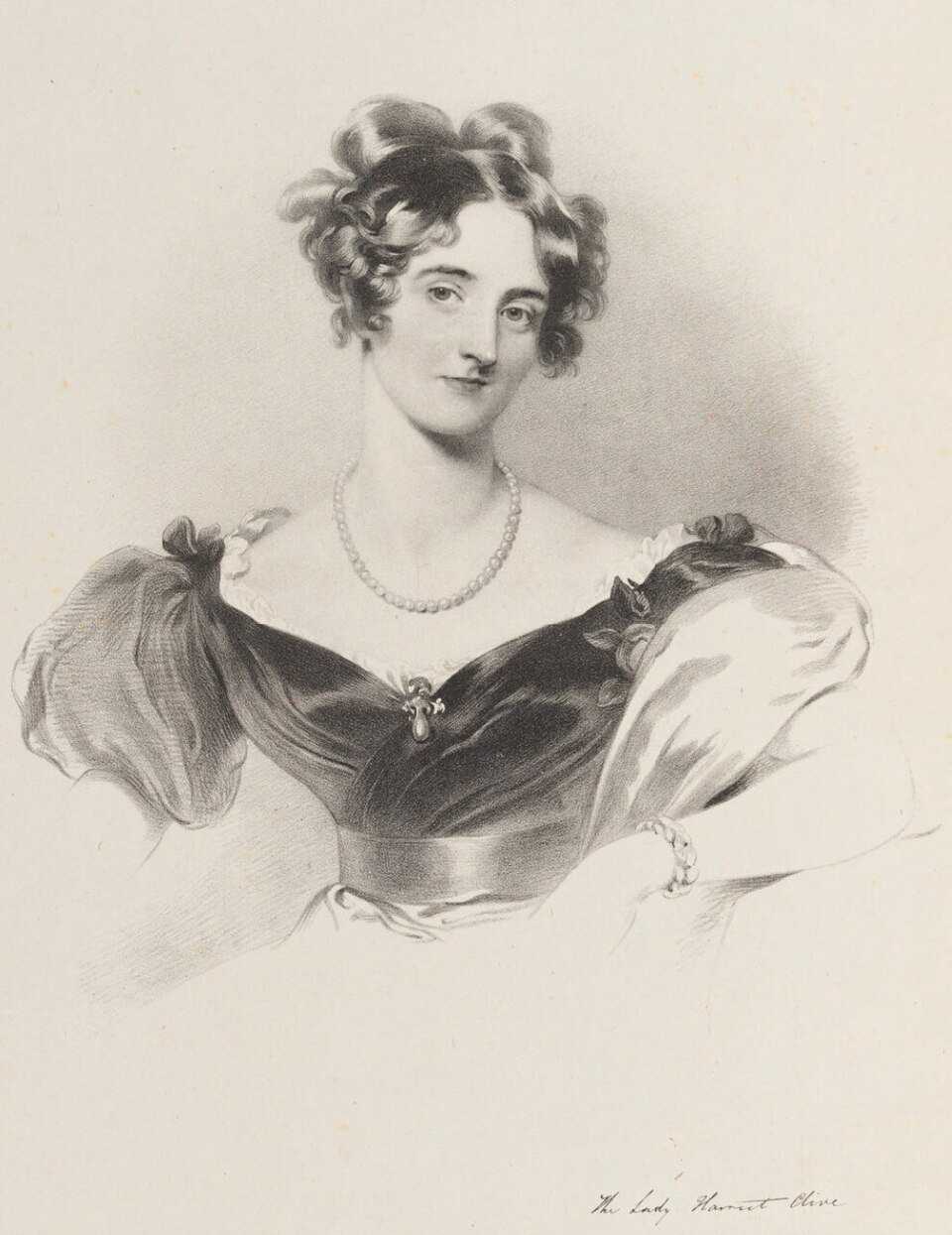
Lady Harriet Clive, later Baroness Windsor. Via Wikimedia Commons, public domain.

A photograph of it survives, taken in 1858 — seven years before the end.
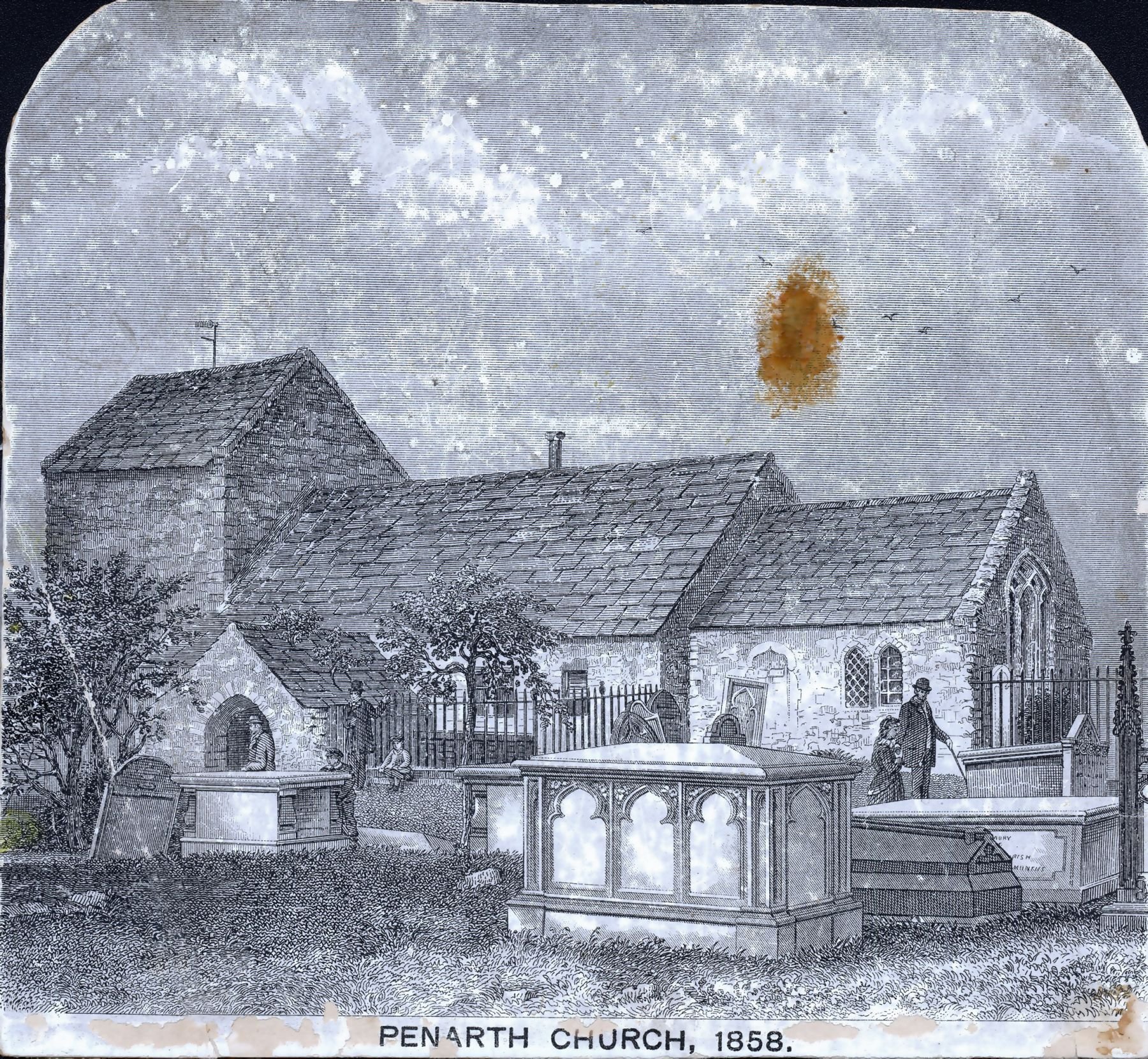
The old church in 1858, seven years before demolition. Photograph via the Friends of St Augustine’s; the original is over 160 years old and out of copyright.
Pieces of the old church survive too: a carved thirteenth-century grave slab and the medieval churchyard cross were carried into the new building. They still stand there.
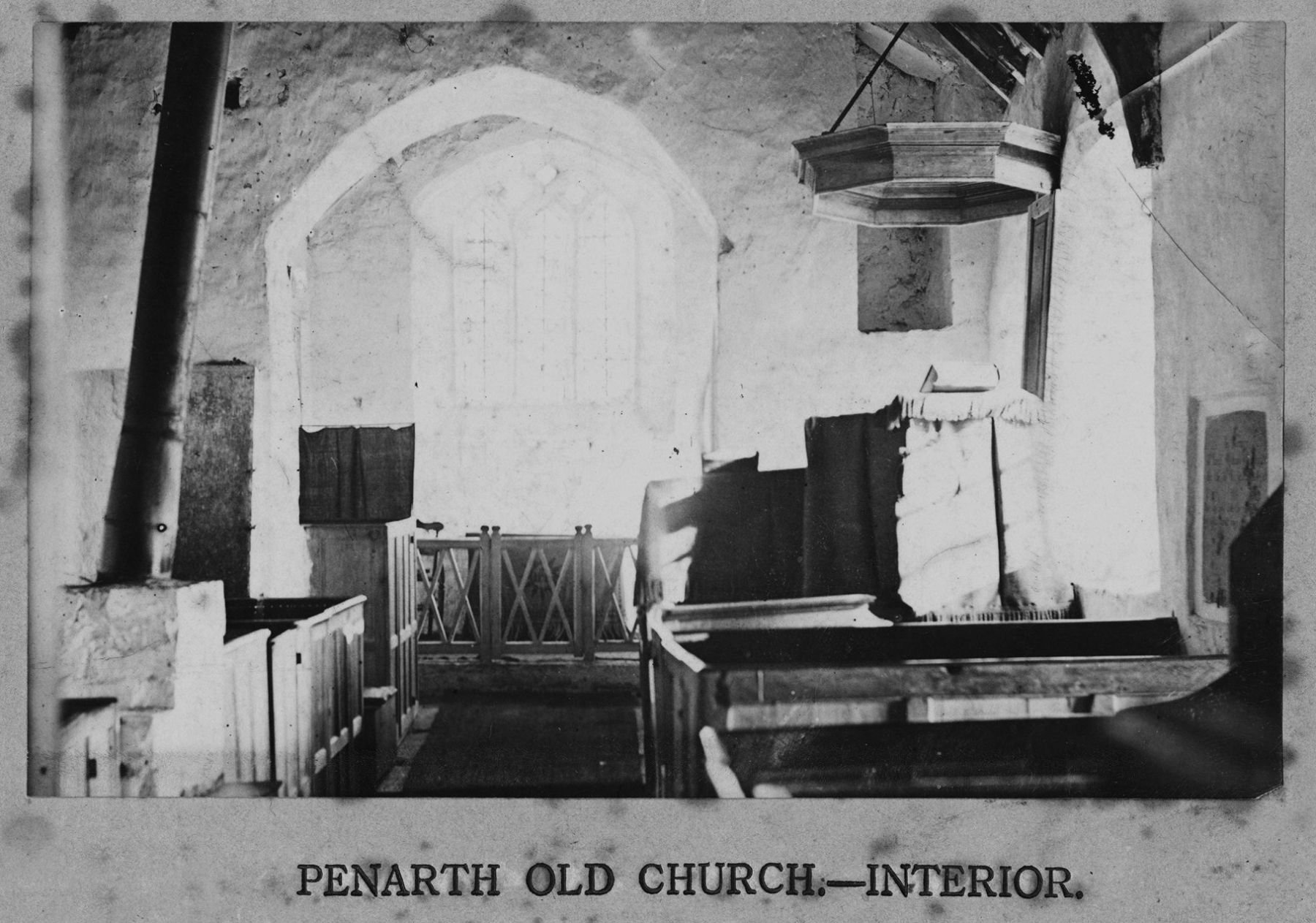
Inside the old church before demolition. Photograph via the Friends of St Augustine’s, out of copyright.
And it survives in paint. In 1833 the artist Alexander Wilson set up on the shore below and painted Penarth Head at low tide. Boats, figures, a horse and cart — and on top of the cliff, small and pale against the sky, the old church.
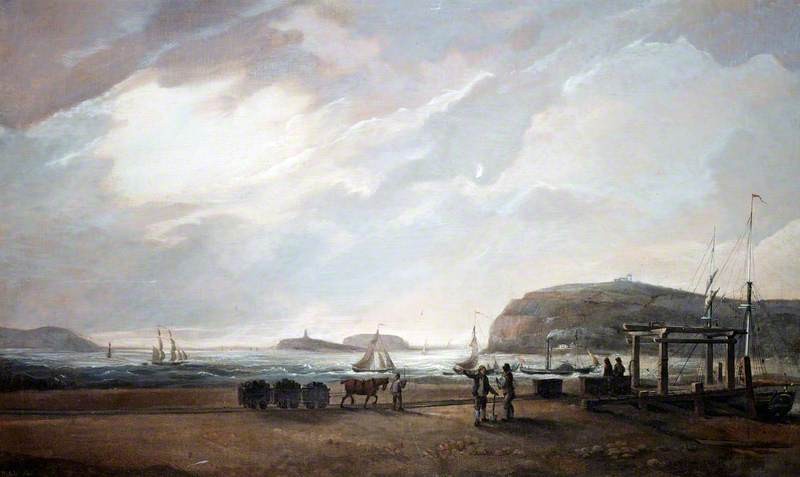
Alexander Wilson, Penarth Head, 1833 — the medieval church is the small building on the summit. Collection of City Hall, Cardiff; image via Wikimedia Commons, public domain.
_-_Penarth_Head_-_PCF18_-_City_Hall_of_Cardiff.jpg)
While writing this I checked the local story that J. M. W. Turner once sketched the old church. As far as I can tell from the Tate’s catalogue of his sketchbooks, he never did. His 1795 Welsh tour took him past Penarth to Llandaff and onwards. The town’s Turner connection comes from the Turner House gallery, named after the paintings its founder collected. So the old church missed its Turner by a few miles. Wilson’s painting is the only painted view of the old church that we have. One modest picture instead of a famous one — and because of that, it is worth even more.
The war story
Here is the one that stopped me when I first read it. In the Second World War, papers from a downed German aircraft showed that Luftwaffe crews used St Augustine’s tower as a landmark on their way to Cardiff docks. For a while there was serious talk of demolishing the tower, maybe the whole church, to take the landmark away. It never happened.
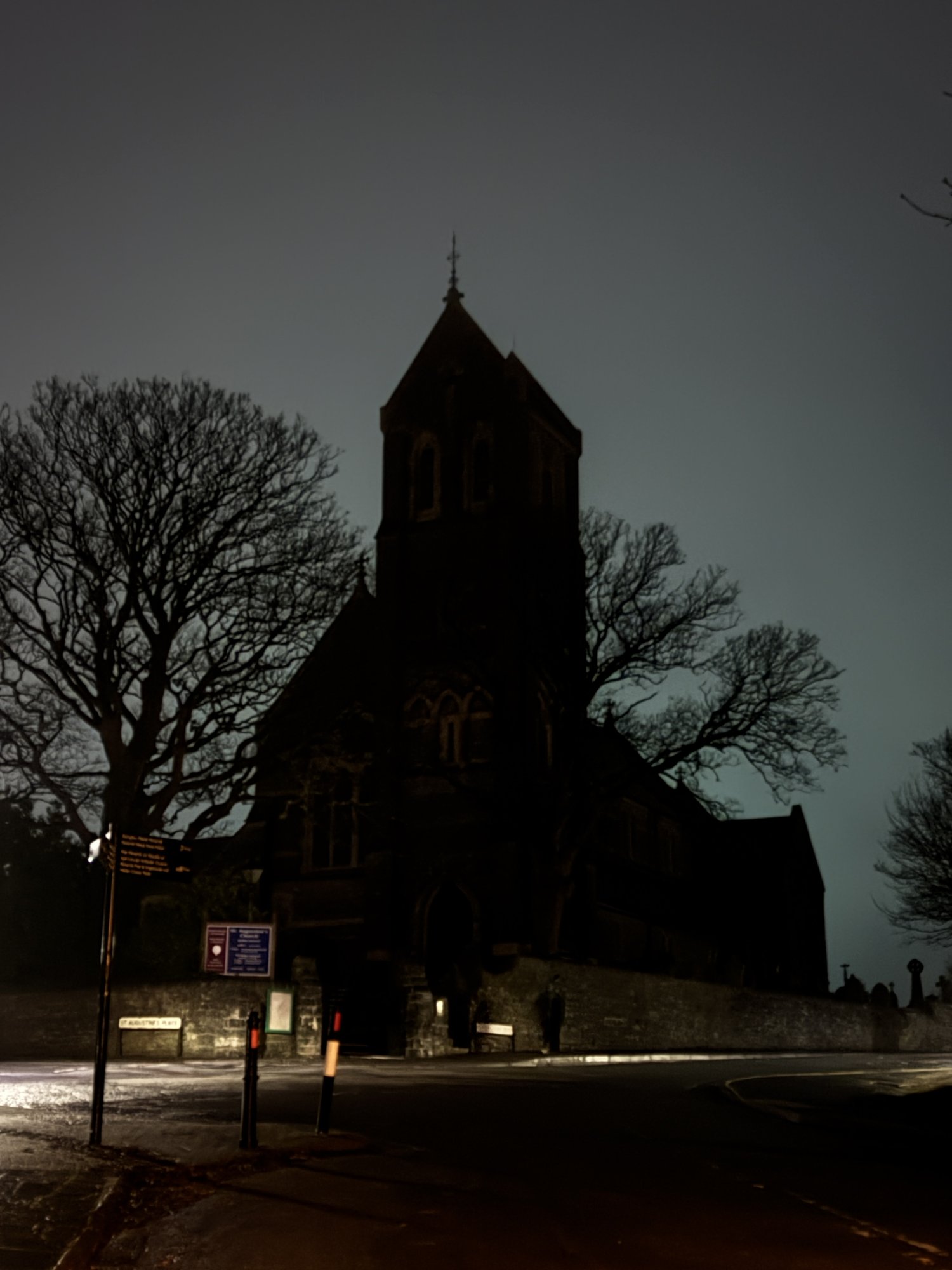
And there is a story people tell around this fact. On the night of 4 March 1941, incendiary bombs burned two other Penarth churches: All Saints by Victoria Square, and Holy Nativity, the smaller church down the hill towards Cogan. Both were rebuilt after the war. St Augustine’s — the biggest and most visible target in town — came through that night. Locals like to say the German bombers spared the tower on purpose, because they needed it standing as their landmark. Nobody can know that. But it is hard to stand up here and not think about it.
The churchyard
For most of the town’s history this churchyard was Penarth’s only burial ground. The parish books record about seven thousand burials. Only about one grave in ten has a stone. The other markers were lost, or broken, or never existed. Once you know that, you stand here differently. The quiet lawns between the monuments are not empty. They are just unlabelled.
In February 1903 the churchyard saw two of the largest funerals South Wales can remember, two days apart. On the Saturday they buried Joseph Parry, the collier’s boy who became Wales’s most famous composer. He wrote “Myfanwy”. Some seven thousand people lined the streets. On the Monday came Samuel Brain, the Cardiff brewer whose name is still on beer pumps across the city. His procession is said to have been twice as big.
Parry’s grave is easy to find: a white marble column with a lyre. The lyre has seven strings, one for each member of his family. Two strings are broken — for the two sons he outlived. People grumbled at the time that the funeral service of Wales’s great composer ran almost entirely in English, without one Welsh hymn. The massed choirs fixed that at the graveside. They sang his own “Aberystwyth” over the coffin.
That same year the new Penarth Cemetery opened on the edge of town. After nearly seven centuries the old churchyard quietly stopped working. The two great funerals were almost its last word.
One more story is told here, quietly, and nobody can check it. Somewhere in this churchyard a dockworker who took his own life is said to lie in an unmarked grave. A friend buried him at midnight, because the church of that time would not bury him by daylight. The story comes with no date. But a dockworker means the years of the coal port — the end of the 1800s or the start of the 1900s. There is no stone to find. Though here, where nine graves out of ten are unmarked, he is the rule, not the exception. People still tell the story. That is its own kind of memorial.
On my last visit the church gave me a leaflet from the Friends of St Augustine’s called “A Churchyard with a View”. From it I learned what the volunteers here have done. A drone mapped the churchyard from above. People copied more than seven thousand entries from the old burial books into an online map. They matched over seven hundred photographs of the stones to the records. Now anyone can type in a family name and see who lies where, up to two hundred years back. The lawn gets some of its names back.
The same leaflet says that in Victorian times, when parks were few or cost money, people walked and even picnicked among the graves. So walking here for pleasure is an old habit. The volunteers who tame the ivy today are keeping it up.
Drawing here
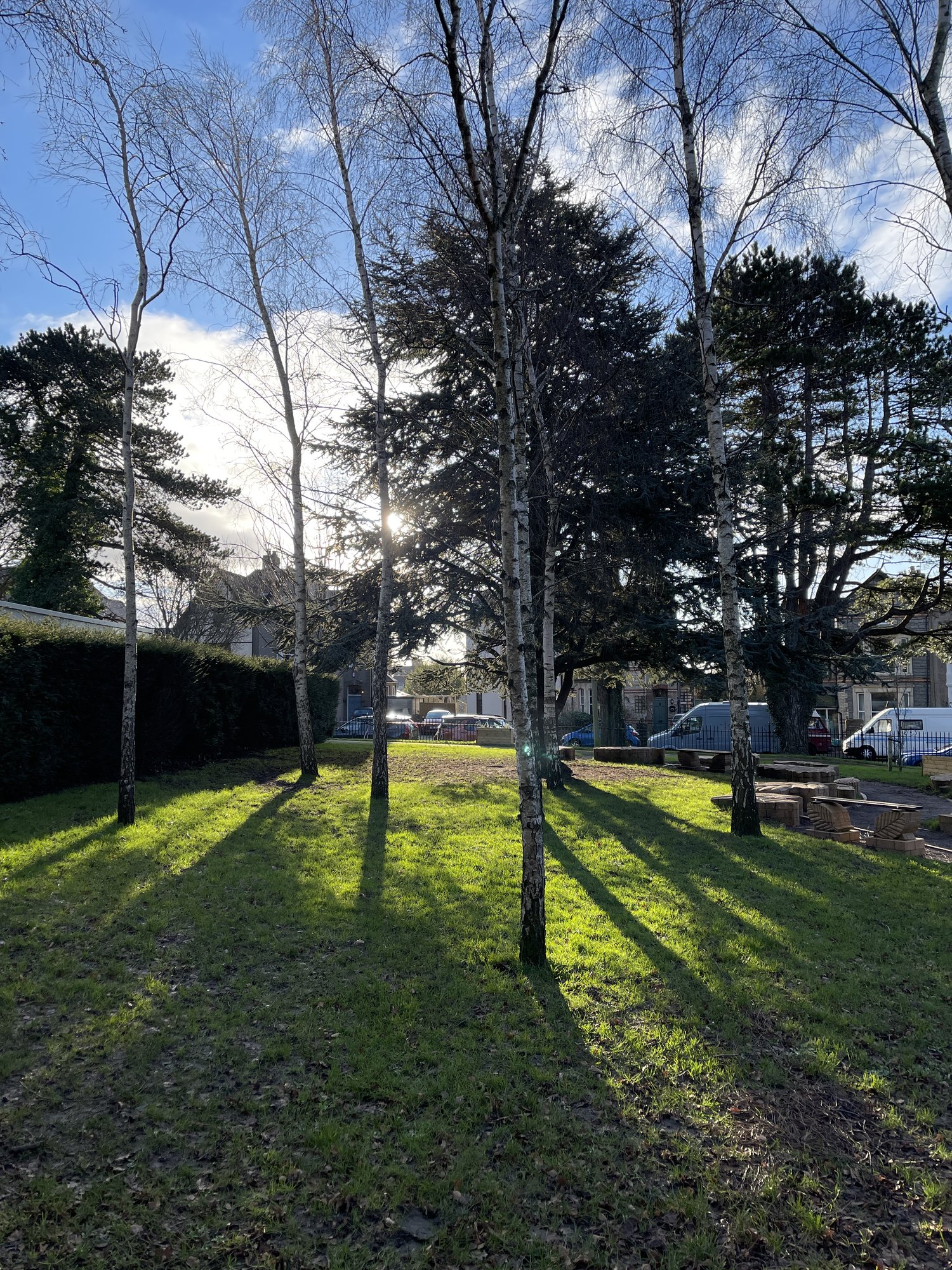
The two ends of this walk ask for opposite things. Belle Vue is soft: benches, deep tree shade, the rhythm of the railings, people crossing the lawns. A place for slow pencil afternoons. In winter the low sun lays the birch shadows across the grass like a second set of railings.
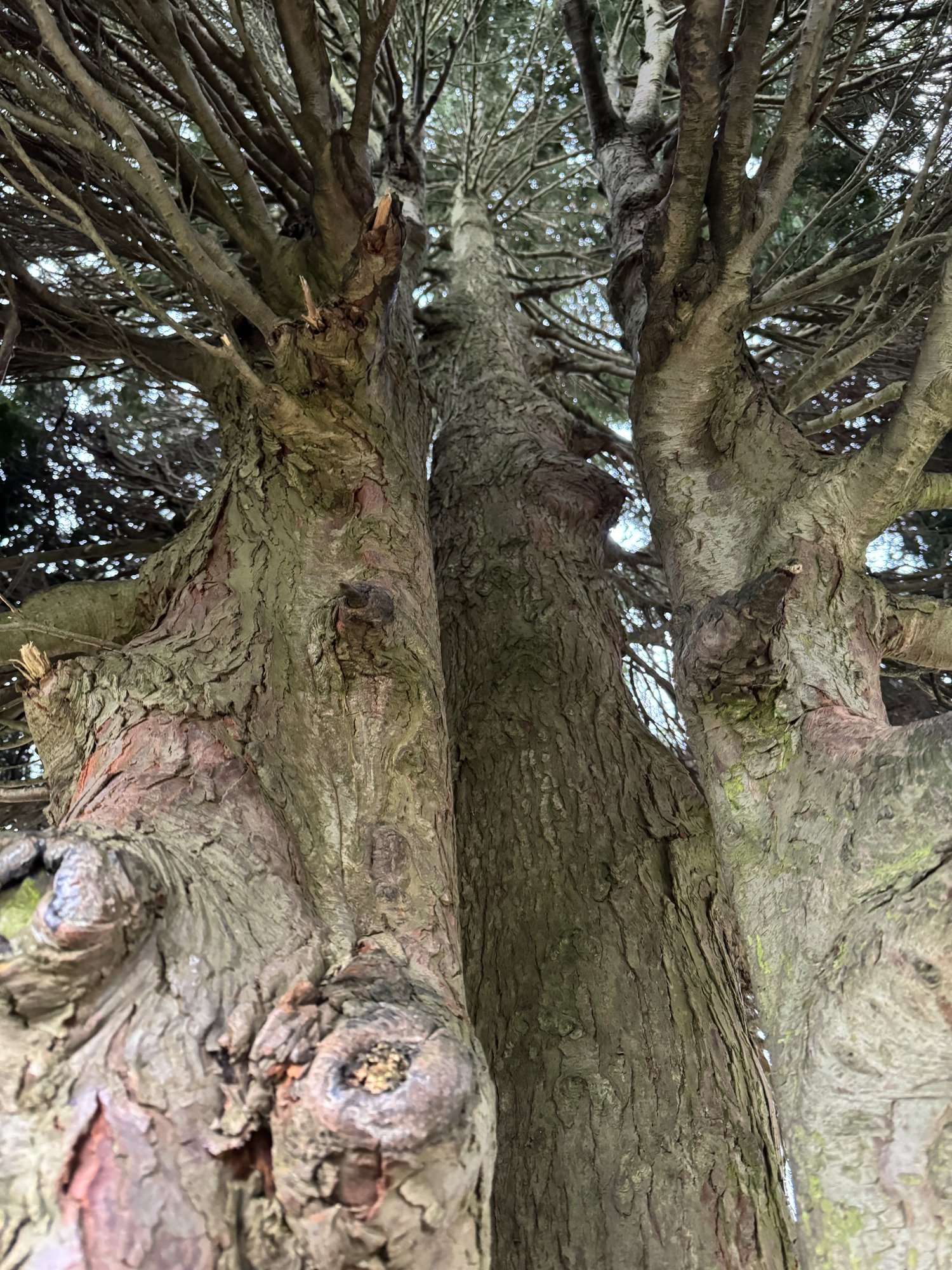
The old yews are subjects on their own. Stand under one and look up: a whole system of rising trunks, like a cathedral that grew instead of being built.
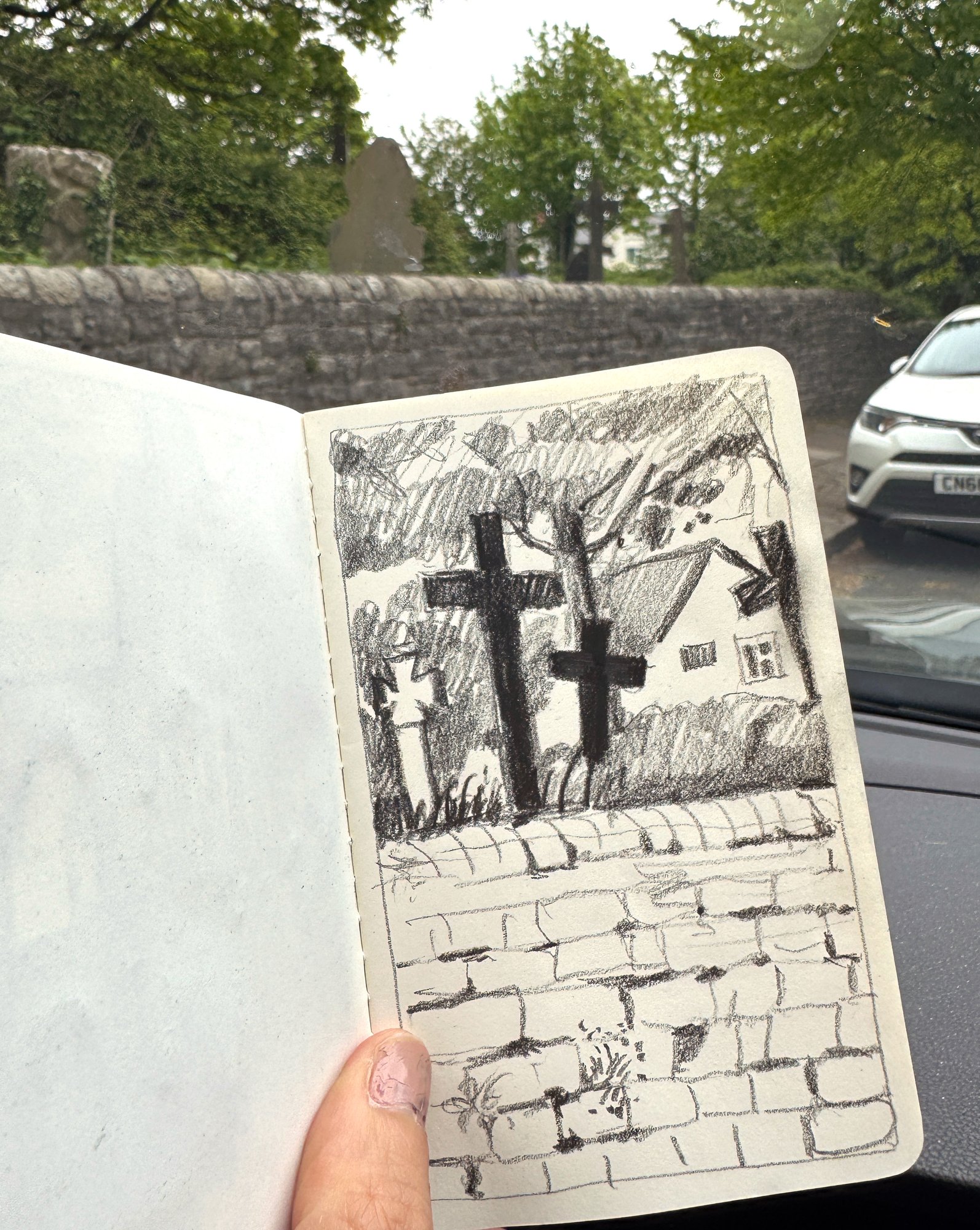
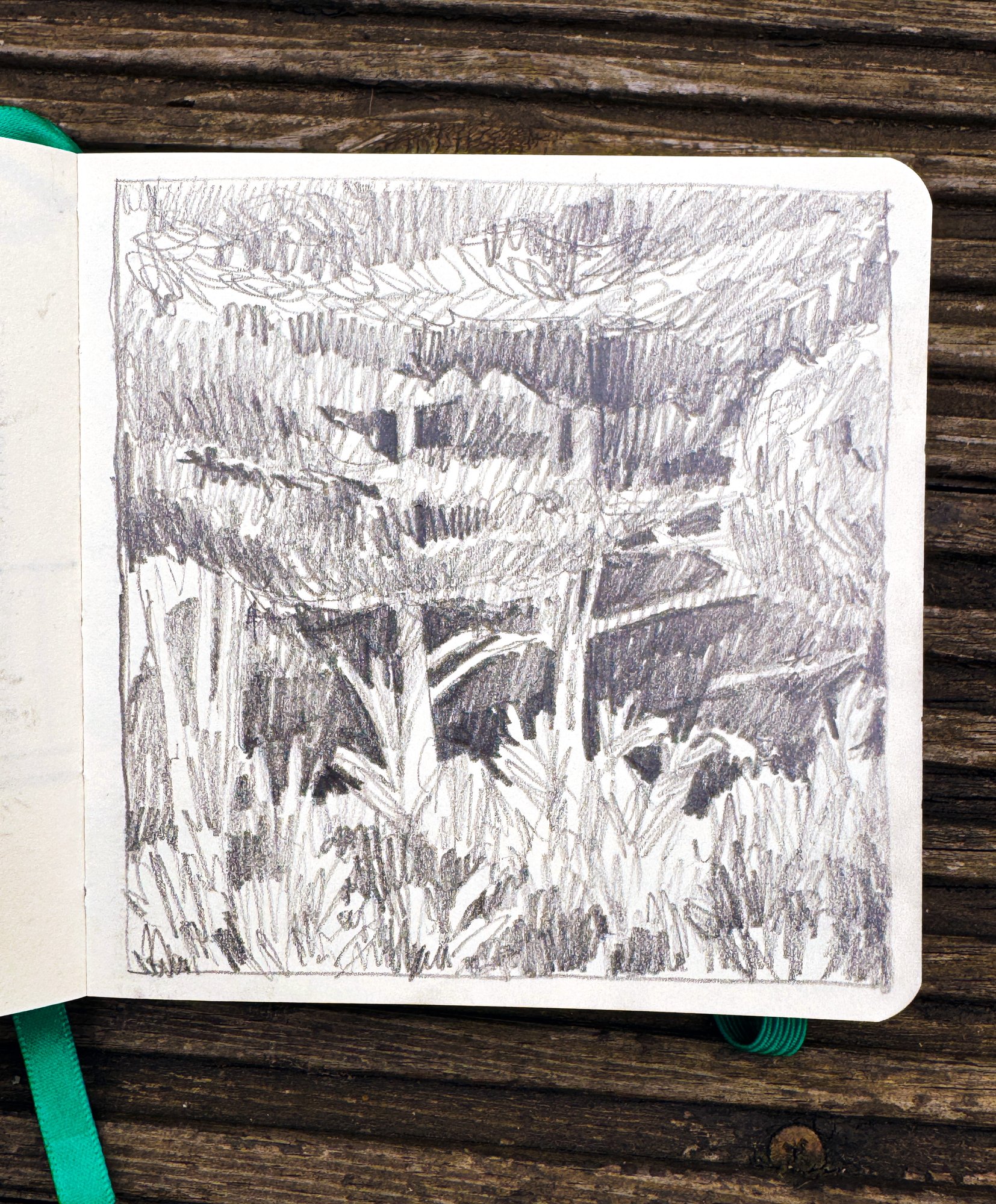
The church end of the walk is different. More wind, more sky, fewer benches. One rainy day I drew the churchyard crosses straight from the car, through the windscreen. It worked.
Inside the church I drew with coloured pencils: the striped arch, the stained glass, the gold cross. One visit was not enough. I want to come back and draw more of it.
The church opens for services and occasional open days. The tower and the churchyard are always there.
Everything from what I bring to an outdoor sketching meetup applies here, with one addition for the Head: wind, always, from somewhere.
Practical notes
Belle Vue Park is on Albert Road, five minutes from the town centre. The cafes of Glebe Street and Windsor Road are just downhill. St Augustine’s stands right beside the park, on the highest point of Penarth, although trees and houses hide most of the view from the churchyard. This walk joins up naturally with the Esplanade and the pier below the Head, and with Victoria Square and All Saints — the other church in this story, the one that burned the night St Augustine’s survived.
More of my favourite spots: best places to sketch in Penarth.